In the world of performance builds, turbo setups, and custom exhaust fabrication, there’s one weak point that keeps causing frustration: traditional exhaust joints.
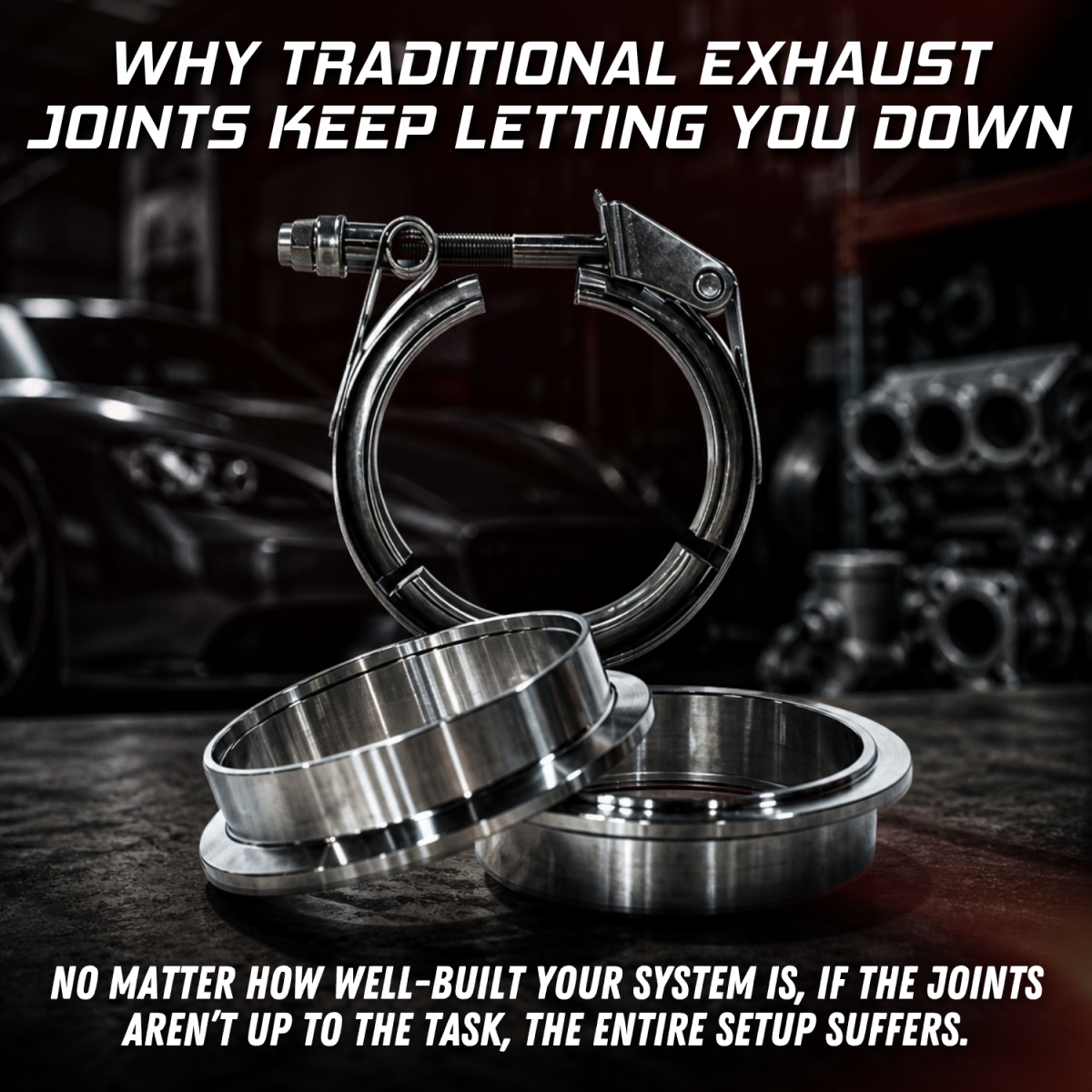
No matter how well-built your system is, if the joints aren’t up to the task, the entire setup suffers.
The Real Problem with Traditional Joints
Conventional exhaust joints—like slip fits, clamps, and basic welds—were never designed for the demands of modern performance setups.
As engines produce more power, heat, and vibration, these older-style joints begin to show their limitations:
- Leaks develop over time Heat cycles and vibration cause joints to loosen, leading to exhaust leaks that affect performance and sound.
- Movement causes wear and failure Engines naturally move under load. Without flexibility, joints take strain they weren’t designed for, leading to cracks or separation.
- Difficult maintenance and removal Once welded or seized, traditional joints often require cutting to remove—turning simple upgrades into time-consuming jobs.
- Inconsistent sealing Clamp-style joints can struggle to maintain a perfect seal, especially under high boost or pressure.
Why It Matters More in Performance Builds
In stock vehicles, these issues might take time to show. But in modified setups—especially turbocharged applications—everything is amplified.
Higher temperatures, increased exhaust flow, and added pressure all push traditional joints beyond their comfort zone. The result? More frequent failures, reduced efficiency, and constant rework.
The Hidden Cost of “Good Enough”
Many builds rely on what’s quick or available at the time. A basic clamp here, a weld there—it works… for a while.
But over time, those small compromises add up:
- Repeated repairs
- Loss of performance
- Frustrating downtime
What seems like a simple solution often becomes the most expensive part of the system in the long run.
A Better Way Forward
Modern exhaust systems demand better connection solutions—ones that can handle heat, movement, and pressure without failing.
Upgraded joint systems like V-band clamps and flex sections are designed specifically for this. They provide:
- Secure, leak-free sealing
- Easy installation and removal
- Improved durability under stress
- Better alignment and fitment
Flex pipes, in particular, help absorb engine movement and vibration, reducing stress on the rest of the system and preventing cracks.
Build It Right the First Time
At the end of the day, your exhaust system is only as strong as its weakest connection.
Choosing the right joints isn’t just about convenience—it’s about reliability, performance, and longevity.
If you’re serious about your build, it’s worth moving beyond traditional solutions and investing in components designed for the demands of modern performance.